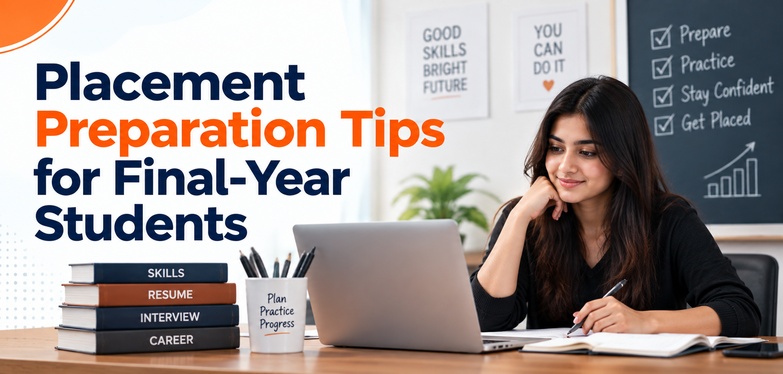
For many final-year students, placement season brings a mix of excitement and nervousness. After spending years attending classes, completing assignments and working on projects, it is finally time to enter the professional world. However, getting placed requires more than good academic scores. Students need a clear strategy covering aptitude tests, technical knowledge, communication, resumes and interviews. Good placement preparation for students helps them understand what recruiters expect and builds confidence before the actual recruitment process begins. Whether you are applying for your first job or exploring different career options, starting early can make the process much easier. With the right guidance from colleges with placement assistance and consistent practice, students can approach campus recruitment with greater confidence.
Why Is Placement Preparation Important for Students?
Campus recruitment can involve several stages, including aptitude tests, group discussions, technical assessments and personal interviews. Each stage checks a different set of abilities.
Effective preparation helps students:
- Identify their strengths and weak areas.
- Improve aptitude and problem-solving skills.
- Build better communication abilities.
- Create a professional resume.
- Become comfortable answering interview questions.
- Understand company expectations and job roles.
Instead of preparing only a few weeks before recruitment begins, students should follow a practical routine throughout their final year.
Placement Preparation for Students: Key Areas to Focus On
1. Strengthen Your Technical Knowledge
Students should revise the core concepts related to their course and the job roles they want to pursue. Engineering and computer applications students may need to focus on programming, databases, operating systems and other technical subjects. Management, commerce and other students should revise concepts relevant to their chosen roles.
Do not simply memorise definitions. Try to understand how concepts are applied in real situations.
2. Practise Aptitude Tests Regularly
Aptitude tests are commonly used as an initial screening stage. Practise:
- Quantitative aptitude
- Logical reasoning
- Verbal ability
- Data interpretation
- Basic problem-solving
Start with easier questions and gradually move towards timed mock tests. Reviewing incorrect answers is equally important because it helps identify recurring mistakes.
3. Build a Strong Resume
Your resume gives recruiters a quick picture of your education, skills and experience. Keep it clear and relevant.
Include:
- Educational qualifications
- Internships
- Academic or personal projects
- Certifications
- Technical and soft skills
- Achievements
Avoid adding skills that you cannot explain during an interview. If a project appears on your resume, be prepared to discuss your role, challenges and results.
Campus Placement Preparation Through Mock Interviews
One of the most useful placement preparation tips is to practise before facing an actual recruiter. Mock interviews help students become comfortable speaking about themselves and answering unexpected questions.
Practise common questions such as:
- Tell me about yourself.
- Why should we hire you?
- What are your strengths and weaknesses?
- Why are you interested in this role?
- Tell us about your project.
- Where do you see yourself in the next few years?
Ask a teacher, senior or friend to conduct mock interviews and provide honest feedback. Record yourself occasionally to identify problems with speech, confidence or body language.
Improve Communication and Soft Skills
Technical knowledge alone may not be enough to perform well in recruitment. Employers also look for candidates who can communicate clearly, work with others and respond professionally.
Students can improve these skills by:
- Reading newspapers and industry-related articles.
- Taking part in group discussions.
- Speaking in English regularly if it is relevant to their target role.
- Practising presentations.
- Participating in college activities and teamwork.
Confidence does not mean speaking continuously. Good communication also means listening carefully and giving relevant answers.
Research Companies Before Interviews
Before appearing for an interview, learn about the organisation, its products or services, job role and basic industry background. This allows you to give more specific answers when recruiters ask why you want to join the company.
Students should also understand the selection process and eligibility requirements for each campus drive. This makes campus placement preparation more organised and prevents last-minute confusion.
Choose Colleges with Placement Training and Assistance
A student’s preparation becomes easier when their institution provides structured career support. Colleges with placement assistance may offer activities such as aptitude training, resume guidance, industry interaction, interview practice and recruitment drives.
Similarly, colleges with placement training can help students understand the recruitment process and identify areas where they need improvement. However, students must actively participate rather than depending entirely on the college placement cell.
Common Mistakes to Avoid
Avoid these mistakes during placement preparation:
- Starting preparation only after companies begin visiting.
- Ignoring aptitude and communication skills.
- Making an exaggerated or inaccurate resume.
- Memorising interview answers.
- Failing to research the company.
- Being unprepared to discuss academic projects.
- Losing confidence after one rejection.
Remember that rejection from one company does not define your abilities. Use feedback and continue improving.
Conclusion
Successful placement preparation for students is a combination of knowledge, practice, communication and confidence. Final-year students should start with a realistic plan, strengthen their technical and aptitude skills, improve their resumes and regularly practise interviews. Support from colleges with placement assistance can provide valuable direction, but consistent individual effort remains essential. With focused placement preparation tips and regular practice, students can enter campus recruitment better prepared for every stage.
Ready to prepare for your professional journey? Explore the academic programmes and placement support at DIST College and take the next step towards building a successful career.
Frequently Asked Questions
How can students prepare for campus placements?
Students should prepare aptitude, technical subjects, communication skills, resumes and interviews. Regular mock tests and interviews can improve confidence. Students should also research participating companies and understand their selection processes before appearing for recruitment drives.
What skills are important for placement success?
Technical knowledge, problem-solving, communication, teamwork, adaptability and interview skills are important. The exact requirements depend on the job role. Students should focus on both subject knowledge and practical skills that employers value.
How can students perform better in placement interviews?
Students should practise common questions, understand their resume thoroughly and research the company beforehand. Speaking clearly, listening carefully, maintaining professional body language and answering honestly can also create a positive impression.
What are the common mistakes to avoid during placement?
Common mistakes include preparing too late, ignoring aptitude practice, adding false information to a resume, failing to research the company and memorising answers. Students should also avoid becoming discouraged after facing rejection during campus recruitment.
